Craft
Four weeks for
one kilogram
Industrial salt is made in minutes. Ours takes weeks – because evaporating at low temperature simply takes that long.
The process
From brine to crystal
Four steps, and none of them can sensibly be shortened. Boil faster and the crystal structure is destroyed. Skim by machine and the pyramids break.
The brine rises
The state-recognised healing brine comes up from 1.586 metres. It is around three times as salty as the Mediterranean.
Gently boiled
The brine is evaporated at low temperature, not boiled hard. High heat would turn the crystals into the fine, uniform powder you know from the supermarket.
Harvested by hand
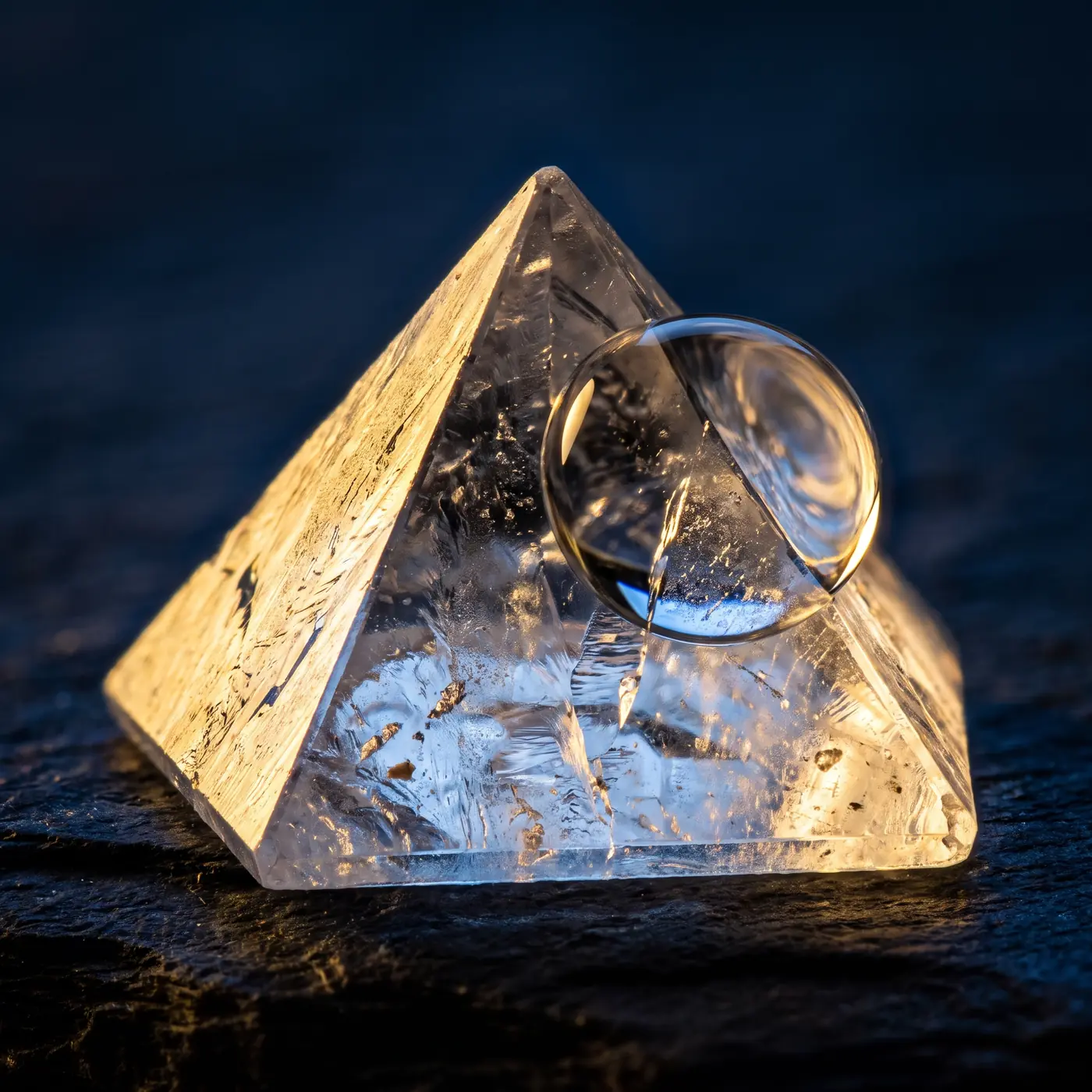
Delicate crystal plates form at the surface and are lifted off with a ladle before they sink. This is the step that cannot be automated.
Dried and filled
The crystals dry, are sieved and filled into jars and pouches by hand. No anti-caking agent, no iodine, no fluoride. Nothing is added.
The workshop
All in one place
Boiling, harvesting, drying, filling, labelling, shipping – all of it happens in Bad Muskau, in the same building. There is no contract filler and no second production site.
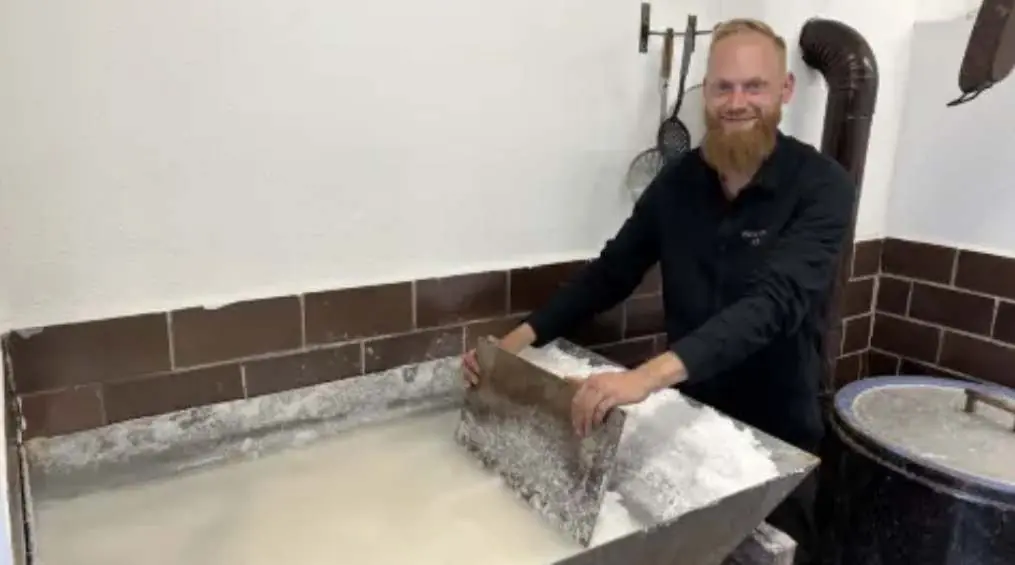
The boiling pan
Where every single crystal is formed.
The founder
How a campfire in Sweden became a salt manufactory
Kurt Korte did not start out as a businessman but as someone wondering what exactly he was sprinkling on his children's food.
The closer he looked, the less he liked the answer. Himalayan salt is in many places blasted out of the mountain. Sea salt carries the burden of today's ocean, microplastics included. And ordinary table salt has anti-caking agents, iodine and fluoride added so that it stays free-flowing and meets the norm.
From 2019 he lived in Sweden, where he began making his own salt for fun: evaporating sea water over a campfire, watching the crystals form, tasting. The pastime turned into a question – whether it could be done properly, with a brine that is genuinely clean.
Back home he came across borehole Hy Bad Muskau 1/2000, the state-recognised healing spring beneath the Fürst Pückler Park. It had been tapped when he was still a child: a brine from 1.586 metres, untouched for millions of years.
It hit me at once: this is the salt I had been looking for. Kurt Korte
Many attempts and a few setbacks followed until the evaporation ran at the right temperature and the crystals had the shape they should. Today the products sit on regional shelves, in delicatessens and in pharmacies – and every jar is still filled by hand.